In an era defined by rapid technological change and evolving job markets, the traditional academic model is no longer enough to prepare students for the future. The National Education Policy (NEP) 2020 has recognized this, championing a shift towards practical, skill-based education. This new focus has propelled a powerful trend in student travel: the rise of vocational tours.
Unlike a traditional field trip that might offer a brief glimpse of a historical site, a vocational tour is a meticulously planned, career-oriented journey. It’s an immersive experience designed to bridge the gap between theoretical knowledge learned in the classroom and the practical skills required in the real world. For schools and colleges aiming to provide a truly holistic education, these tours are becoming an essential component of the curriculum.
What Makes a Vocational Tour Different?
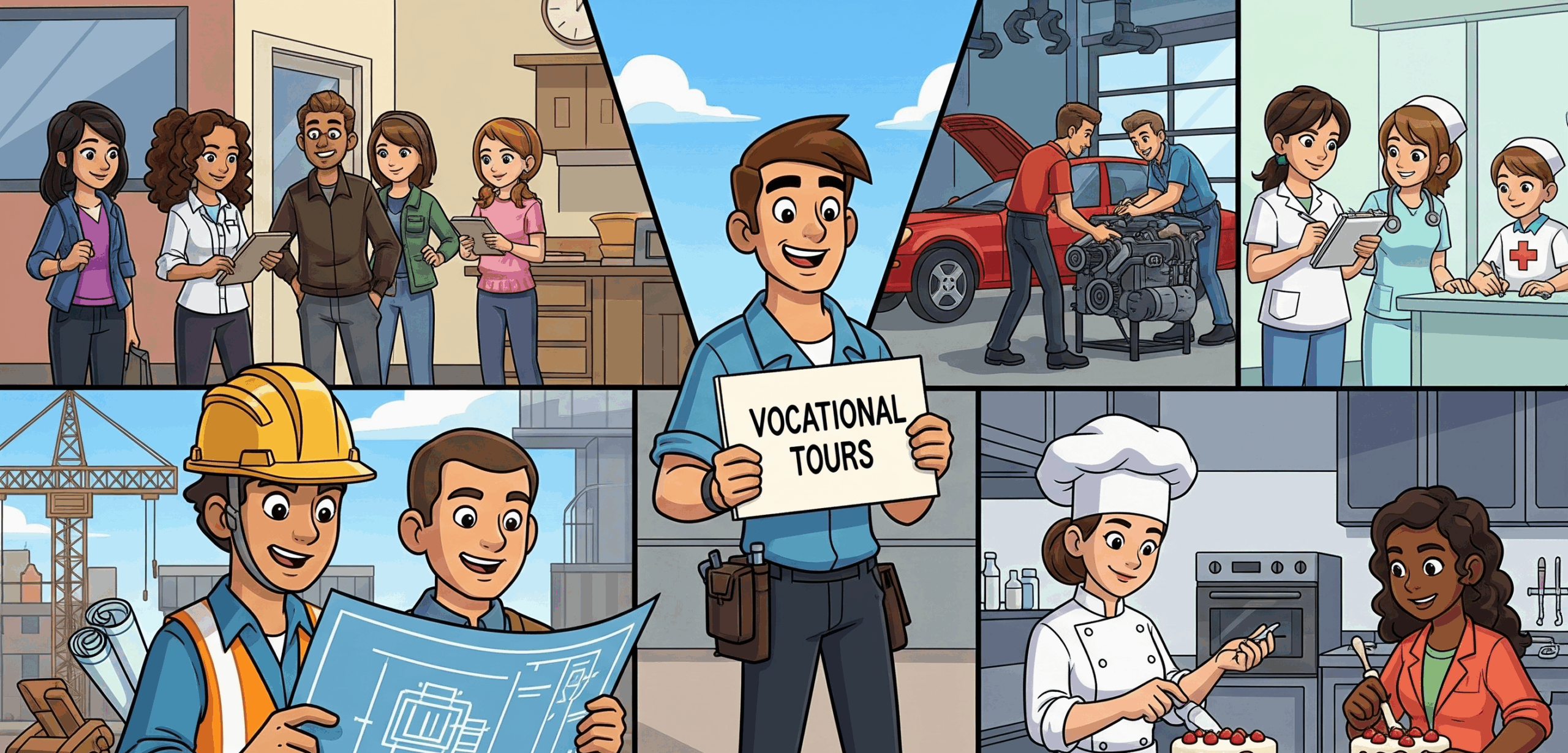
A vocational tour is not just an excursion; it’s a strategic exploration of a specific industry or profession. These tours go beyond passive observation, offering students the chance to:
- Visit a real workplace: Students are taken behind the scenes of a company, whether it’s a high-tech manufacturing plant, a research laboratory, a bustling media studio, or an organic farm.
- Interact with professionals: Students get to speak directly with engineers, designers, artisans, and managers, asking questions about their career paths, daily responsibilities, and the skills they use every day.
- Engage in hands-on activities: The best vocational tours include workshops or simulations where students can try out a task related to the field, making the experience more tangible and memorable.
This direct, unfiltered exposure gives students a level of insight that no textbook can provide. It makes the abstract concept of a career feel real and achievable.
The Tangible Benefits of Vocational Tours
The rise of vocational tours is driven by the clear, measurable benefits they offer to students.
- Connecting Theory to Practice
For many students, the connection between their classroom subjects and the real world can be a mystery. A vocational tour demystifies this. A physics lesson on mechanics becomes instantly relevant when a student sees the complex machinery on an assembly line. An economics class on supply chains comes to life with a visit to a logistics hub. These tours validate classroom learning and motivate students by showing them the “why” behind their studies.
- Informing Crucial Career Choices
Choosing a career path is one of the most significant decisions a young person will make. Vocational tours are an invaluable tool for career exploration, helping students make informed choices. By experiencing a profession firsthand, a student can determine if it aligns with their interests and personality. This can prevent them from investing time and money in a field that isn’t the right fit and can open their eyes to new opportunities they had never considered.
- Developing Essential 21st-Century Skills
Modern workplaces demand more than just technical knowledge. They require a blend of soft skills. A vocational tour places students in an authentic environment where they must practice communication, teamwork, and problem-solving. Working together on a mini-project or collaborating to complete a challenge at a workshop helps them build these vital skills in a context that matters.
- Fostering a Strong Work Ethic
Seeing professionals at work—their passion, dedication, and expertise—can be incredibly inspiring for students. It teaches them about the dignity of labor and the importance of hard work. These interactions provide powerful role models and instill a sense of purpose, encouraging students to approach their academic studies with a greater sense of motivation.
- Providing Networking Opportunities
Vocational tours provide a unique opportunity for students to build a network of professional contacts. Meeting and engaging with industry leaders can lead to mentorships, internships, and even job opportunities in the future. In today’s competitive world, these early connections can give a student a significant head start.
Popular Vocational Tour Destinations
Vocational tours can be planned for nearly any industry, both domestically and internationally.
- Technology & Engineering: A tour of a research and development lab in Bengaluru or a high-tech manufacturing facility in Japan can inspire the next generation of engineers and data scientists.
- Agriculture & Food Science: Visiting an organic farm in Kerala or a food processing plant gives students a firsthand look at the farm-to-table process.
- Art & Design: A trip to a local textile workshop in Jaipur or an animation studio provides insights into creative and vocational careers.
- Science & Healthcare: A tour of a hospital or a biotechnology lab can give aspiring doctors and researchers a glimpse into their potential future.
Why Partner with an Educational Tour Company?
The logistics of organizing a vocational tour can be complex. That’s why schools and colleges are increasingly partnering with specialized tour companies. A professional provider handles:
- Customization: They design tailored educational itineraries that meet specific curriculum requirements and student interests.
- Industry Access: They have established relationships with companies and institutions, securing access that would be difficult to obtain otherwise.
- Safety and Support: They manage all travel logistics, ensuring student safety, providing trained tour managers, and offering 24/7 support.
By delegating the planning to experts, educators can focus on what matters most: enriching the students’ learning experience.
Conclusion: A New Era for Education
The rise of vocational tours is a testament to a new era of education that values practical skills and career readiness as much as academic knowledge. These tours are no longer just an extra-curricular activity but a vital component of a student’s development, helping them connect the dots between their academic pursuits and their future careers. By embracing career-oriented tours, schools and colleges can empower their students to make informed choices, build a foundation for professional success, and embark on a fulfilling journey of lifelong learning.