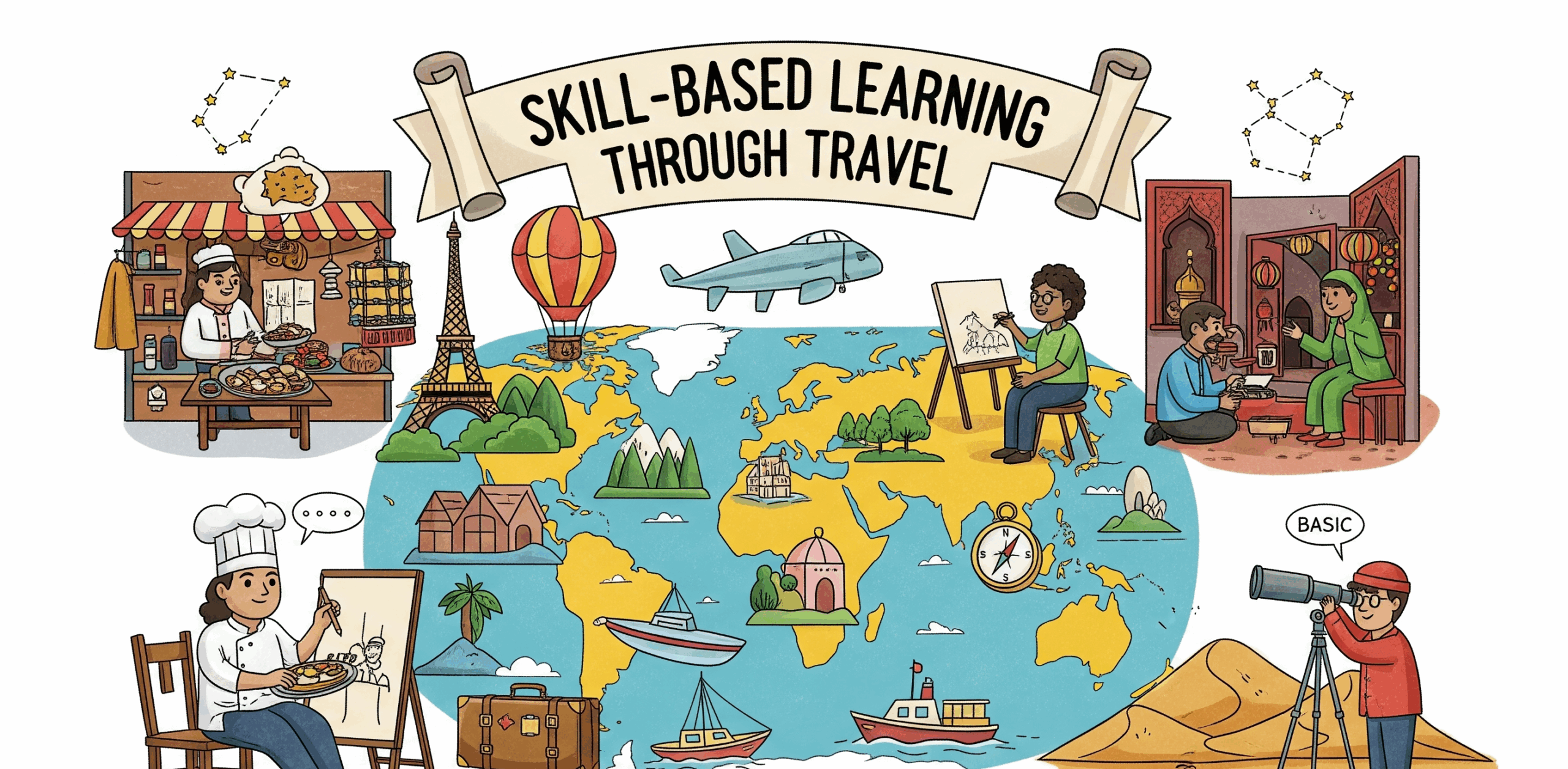
In a world that values practical skills over rote memorization, education is evolving. The traditional classroom is no longer the sole source of knowledge; the entire world has become a learning laboratory. Skill-based learning through travel is at the forefront of this new educational paradigm, offering students a dynamic and immersive way to develop the competencies they need to succeed in the 21st century.
This guide will explore how a well-planned educational tour goes beyond sightseeing to foster a wide range of essential life skills, providing a truly holistic learning experience that complements and enriches academic study.
The New Educational Paradigm: Beyond the Textbook
Modern educational policies, including India’s NEP 2020, champion a shift from passive learning to active engagement. The goal is to move beyond teaching “what to think” and instead focus on “how to think.” This is where learning through travel proves to be an invaluable tool. It places students in new and challenging environments where they must apply knowledge, adapt to new situations, and interact with diverse cultures.
Essential Life Skills You Can Learn on an Educational Tour
An educational tour is a hands-on workshop for life. Here are some of the key skills students can develop during their journey:
- Problem-Solving and Critical Thinking
Every trip presents small, unexpected challenges. Whether it’s navigating a new city, deciphering a local public transport map, or collaborating on a group project, students are forced to think on their feet. These real-world scenarios sharpen their critical thinking skills and teach them to approach problems with creativity and resilience, a skill that is highly valued in any profession.
- Communication and Interpersonal Skills
When traveling with a group and interacting with new people, students learn to communicate effectively across cultural and social boundaries. They practice articulating their thoughts, listening to different perspectives, and working collaboratively with peers. This direct exposure enhances their communication skills and prepares them for the diverse social environments they will encounter in their future careers.
- Adaptability and Resilience
Stepping out of one’s comfort zone is a core component of educational travel. Students learn to adapt to new routines, climates, and cuisines. Experiencing minor travel disruptions or cultural differences teaches them to be flexible, patient, and resourceful. This builds resilience—the ability to bounce back from challenges—a skill that is crucial for personal and professional success.
- Cultural Empathy and Global Awareness
By visiting new places and interacting with local communities, students develop a deeper appreciation for different cultures, traditions, and ways of life. This direct exposure fosters empathy and global awareness, helping them see the world from a broader perspective. They learn that despite our differences, we are all part of a global community, a lesson that cannot be taught from a book.
- Leadership and Teamwork
An educational tour can provide ample opportunities for students to take initiative, share responsibilities, and work together. Whether they are leading a small group for a scavenger hunt or collaborating on a post-trip presentation, they learn the importance of teamwork and discover their own leadership potential.
- Financial Literacy and Planning
An educational tour can be an excellent opportunity to teach students about budgeting. They can learn to manage a small budget for food, souvenirs, or local travel. This hands-on experience provides a practical lesson in financial literacy that they can apply for the rest of their lives.
The Role of a Professional Educational Tour Company
While the benefits of skill-based learning through travel are clear, the logistics of planning such a trip can be overwhelming for schools. This is where a professional educational tour company becomes a crucial partner.
Providers like Knowledge Navigators specialize in creating tailored educational itineraries that are specifically designed for skill development. They handle all the complex logistics—from travel and accommodation to bookings and safety protocols—allowing educators to focus entirely on the students’ learning experience.
By collaborating with local experts, tour companies can secure access to unique workshops and community projects where students can apply their skills in a meaningful context. This ensures that every moment of the trip is an intentional learning opportunity.
Conclusion: A Transformative Journey for Life
In a world that is constantly changing, the skills students acquire outside the classroom are just as important as the knowledge they gain within it. Skill-based learning through travel represents the new frontier of education, preparing students for the future by teaching them to be adaptable, resourceful, and culturally aware global citizens.
By embracing this transformative approach, schools can provide their students with a learning experience that is not only unforgettable but also equips them with the essential competencies they need to thrive. These are not just trips; they are investments in a brighter, more capable future.